


That one-star Google review is costing you business. You know it’s fake. Maybe it was posted by a competitor, a disgruntled ex-employee, or someone who was never even a customer. But there it sits, dragging your rating down and turning away potential customers who check Google reviews before visiting any business.
Or maybe you’re on the other side. You left a review you now regret, and you want to edit or delete it.
Either way, this guide covers exactly how Google review removal works in India in 2026, whether you’re the reviewer or the business owner. It includes Google’s official process, the legal routes available under Indian law, and what to do when Google refuses to remove a review that violates their own policies.
For Reviewers: How to Edit or Delete Your Own Review
This part is straightforward.
Editing Your Review
Open Google Maps. Tap your profile icon, then “Your contributions,” then “Reviews.” Find the review you want to change. Tap the three dots, then “Edit review.” Make your changes and submit.
Deleting Your Review
Same path: Google Maps > Profile > Your contributions > Reviews. Find the review. Tap the three dots, then “Delete review.” Confirm.
Your review will be permanently removed. Google doesn’t archive deleted reviews.
For Business Owners: Getting Fake or Defamatory Reviews Removed
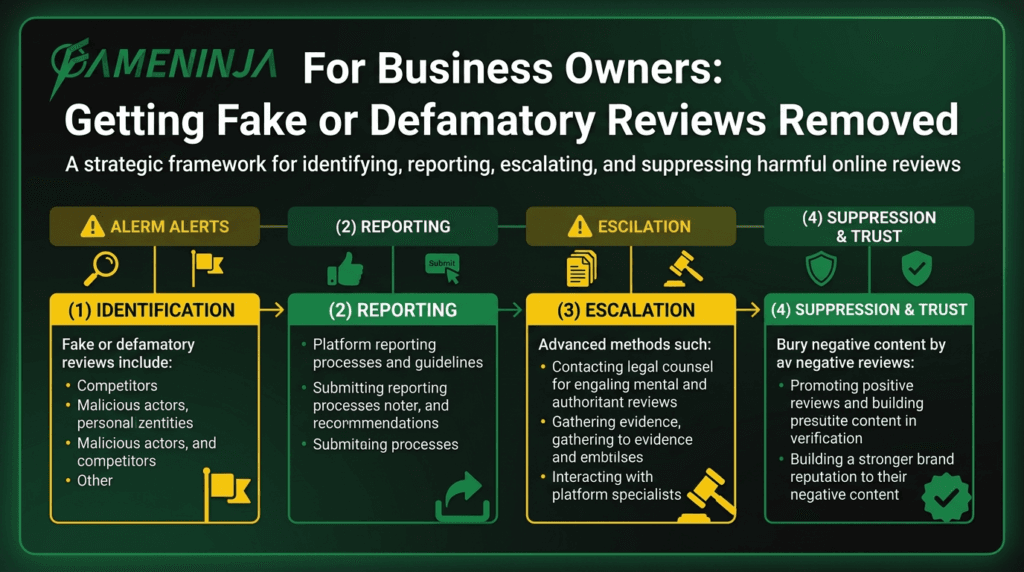
This is where it gets complicated. Google’s official policy is clear: they only remove reviews that violate their Content Policies. Reviews that are negative but don’t violate policies will not be removed, regardless of how unfair you consider them.
What Google Will Remove
Reviews that violate Google’s policies include:
Spam and fake content. Reviews from people who were never customers. Reviews posted by bots. Mass review attacks (multiple fake reviews posted in a short period).
Off-topic reviews. Reviews about things unrelated to the actual customer experience at your business.
Restricted content. Reviews promoting illegal activities, containing hate speech, or making threats.
Conflicts of interest. Reviews posted by competitors, current employees, or people with a financial interest in discrediting your business.
Personally identifiable information. Reviews that include someone’s phone number, address, or other personal information.
Profanity and harassment. Reviews that use excessive profanity or personally attack specific individuals.
How to Flag a Review for Removal
Step 1: Go to your Google Business Profile. Find the review you want to report.
Step 2: Click the three dots next to the review and select “Flag as inappropriate.”
Step 3: Select the reason that best matches the violation.
Step 4: Submit and wait. Google typically reviews flagged reviews within 5-14 days.
Step 5: If the review isn’t removed, use the “Appeal” option in your Google Business Profile under “Reviews.” You can provide additional context about why the review violates policies.
When Flagging Doesn’t Work
Google’s automated and manual review moderation often keeps reviews that business owners believe should be removed. If flagging fails, you have additional options in India.
The India-Specific Legal Routes
Indian law provides several mechanisms for removing Google reviews that are defamatory or fraudulent. These go beyond Google’s standard moderation process.
Route 1: IT Rules 2021 Grievance Officer
Google is required to have a Grievance Officer for India under the IT (Intermediary Guidelines) Rules 2021.
File a formal complaint with Google’s India Grievance Officer:
- Identify the specific review(s) by URL and content
- Explain why the review is defamatory (false statements of fact) or violates Indian law
- Reference the IT (Intermediary Guidelines and Digital Media Ethics Code) Rules, 2021
- If the review is from a non-customer, provide evidence (booking records, transaction records)
- Request removal within the stipulated timeframe
The Grievance Officer must acknowledge within 24 hours and resolve within 15 days.
If the Grievance Officer doesn’t resolve it, escalate to the Grievance Appellate Committee at gac.gov.in.
Route 2: Legal Notice for Defamation
If the review contains false statements of fact (not opinions) that harm your business reputation, send a legal notice to:
The reviewer (if identifiable) under Section 79 BNS 2023 (defamation).
Google under Section 79 IT Act (intermediary liability), arguing that you’ve provided “actual knowledge” of the defamatory content and Google’s continued hosting results in loss of safe harbor.
A legal notice often triggers Google to re-review the content through their legal team, which is separate from their standard moderation team.
Route 3: Consumer Protection Act 2019
If the fake review constitutes an “unfair trade practice” (e.g., a competitor posting fake negative reviews), the Consumer Protection Act 2019 provides remedies:
File a complaint with the Consumer Disputes Redressal Commission. If a competitor is systematically posting fake reviews to damage your business, this constitutes unfair trade practice under Section 2(47) of the Act.
E-commerce provisions: The Consumer Protection (E-Commerce) Rules 2020 require platforms to not manipulate consumer reviews. While Google isn’t strictly an e-commerce platform, the principles around review manipulation are relevant.
Route 4: Court Order
For persistent fake review campaigns that cause significant business damage:
Petition the High Court for an injunction directing Google to remove the reviews. You’ll need to demonstrate that the reviews are fake/defamatory, that you’ve exhausted other remedies, and that the reviews are causing ongoing business harm.
John Doe order if you don’t know the identity of the fake reviewers. This directs Google to remove the reviews and preserve information that could help identify the reviewers.
The Strategic Response Approach
Not every negative review should be fought. Sometimes, responding professionally is more effective than removal.
When to Respond Instead of Remove
If the review is a genuine customer sharing a negative experience, removal is the wrong approach. Even if you could get it removed, the customer will likely post again (angrier this time) and tell others about your attempt to silence them.
Instead, respond publicly:
Acknowledge the specific issue they raised Apologize for the experience (even if you disagree with their characterization) Explain what you’ve done to address the issue Invite them to contact you directly to resolve it
A well-crafted response to a negative review can actually improve your business reputation. Potential customers who read reviews are looking at how you handle criticism, not just the criticism itself.
When to Fight for Removal
Remove reviews when they are:
Factually false (claims something happened that didn’t) From someone who was never a customer From a competitor (identifiable through profile, timing, or content) Part of a coordinated fake review campaign Containing personal information or threats Using profanity or hate speech
Dilution Strategy
For reviews that can’t be removed and don’t warrant a legal response, dilute them with genuine positive reviews:
Ask satisfied customers to leave reviews. The best time is right after a positive experience. Make it easy: send a direct link to your Google review page. Don’t incentivize reviews. Google detects and penalizes incentivized reviews. Maintain a steady flow. Two to three new reviews per month look natural. Thirty reviews in one week look suspicious.
Industry-Specific Review Challenges for Indian Businesses
Different industries in India face different review challenges. Here’s what we’ve seen:
Healthcare (doctors, hospitals, clinics). Patients sometimes leave negative reviews after bad outcomes, even when the medical care was appropriate. These reviews are protected speech in most cases (patient experience is an opinion). However, reviews that disclose confidential medical information can be removed under patient privacy grounds. Respond to negative medical reviews carefully, as HIPAA-equivalent privacy obligations under Indian medical ethics prevent you from disclosing patient details even in defense.
Restaurants and hospitality. High volume of reviews means individual negative reviews matter less, but patterns matter more. A consistent theme in negative reviews (slow service, hygiene issues) carries more weight than one angry customer. Focus on the pattern, not individual reviews.
Legal and financial services. Client confidentiality prevents you from responding with specifics. Keep responses general: “We take client concerns seriously. We’d welcome the opportunity to discuss this further offline.” Never reference case details or client situations.
Real estate and construction. Reviews in this sector often involve large financial stakes and emotional buyers. Negative reviews from homebuyers can be particularly detailed and damaging. When reviews contain factually verifiable claims (delayed possession, missing amenities), document your side with evidence for potential legal proceedings.
Education and coaching. Negative reviews from students or parents are common after exam results. These are almost always opinions protected under free speech. Focus on building a strong positive review base rather than fighting individual negative ones.
For all industries, the key insight is that Google reviews are now a primary factor in both traditional search rankings and AI search reputation. Managing them isn’t optional.
Google Reviews and AI Search

Google reviews increasingly influence what AI search engines say about your business. When someone asks ChatGPT or Perplexity “Is [Your Business] good?”, AI models pull from Google reviews among other sources.
A low Google review rating or prominent negative reviews can shape AI-generated answers about your business. This means Google review management is now part of your AI search reputation strategy, not just a local SEO concern.
For the full picture of how reviews affect your digital reputation, see our guide on business reputation management.
The Timeline Problem: Why Speed Matters for Review Management
One pattern we see repeatedly with Indian business owners: they ignore a fake review for months, then suddenly want it removed urgently when they notice it’s affecting business.
The problem is that older reviews are harder to remove. Here’s why:
Google’s moderation team prioritizes recent reports. A review flagged within days of posting gets more attention than one flagged six months later.
Evidence degrades over time. Transaction records, employee records, and other evidence proving a review is fake become harder to produce as time passes.
The review accumulates engagement. A fake review that’s been live for months may have received “helpful” votes from other users, which Google’s algorithm interprets as validation.
Platform changes. Google occasionally updates its review policies and moderation processes. A review that might have been removable under an older policy may not qualify under current policies.
The recommendation: Check your Google reviews weekly. Flag any suspicious review within 48 hours of it appearing. This dramatically improves your chances of successful removal through Google’s standard process.
For businesses that want to stay on top of reviews across Google and other platforms, our guide on ORM tools for personal brand monitoring covers automated monitoring solutions that alert you to new reviews in real time.
How FameNinja Handles Google Review Cases
At FameNinja, Google review management is part of our business reputation management services:
We assess each review individually. Not every negative review should be removed. We evaluate which reviews violate Google’s policies or Indian law and which are genuine feedback that should be addressed through professional responses.
We use all available channels. For reviews that should be removed, we file through Google’s standard process, the Grievance Officer route, and legal channels when necessary.
We draft professional responses. For reviews that can’t or shouldn’t be removed, we help businesses craft responses that turn a negative review into a demonstration of good customer service.
We build review generation systems. We help businesses set up processes for consistently generating genuine positive reviews, creating a sustainable improvement in their overall rating.
We address the AI dimension. We ensure that Google review improvements translate to better AI search representation through our GEO optimization strategies.
FAQ
Can I pay Google to remove a negative review?
No. Google does not offer paid review removal services. Reviews can only be removed through Google’s standard content policy flagging process, or through legal channels (Grievance Officer, court orders). Any service claiming to have a paid arrangement with Google for review removal is misrepresenting their capabilities.
How long does Google take to remove a flagged review?
Google typically reviews flagged reviews within 5-14 days. If the review clearly violates their policies (spam, personal information, threats), removal can happen within a few days. For borderline cases, it may take longer. If the initial flag is rejected, the appeal process adds another 5-14 days.
Can I find out who posted an anonymous Google review?
Through normal means, no. Google protects reviewer anonymity. However, in defamation cases, Indian courts can order Google to disclose reviewer identity. This requires a legal proceeding where you demonstrate the review is defamatory and you need the identity for legal remedies. Practically, this is worth pursuing only for reviews causing significant business harm.
What if a competitor is posting fake negative reviews?
This constitutes unfair trade practice under the Consumer Protection Act 2019. File a complaint with the Consumer Disputes Redressal Commission. Simultaneously, flag the reviews through Google’s process and file a Grievance Officer complaint. If you can prove the reviews are from a competitor (through IP analysis, timing patterns, or content analysis), a court order can direct removal and damages.
How many Google reviews do I need to improve my rating?
The impact of new reviews depends on your total review count. If you have 10 reviews at 3.0 stars, five new 5-star reviews would bring you to approximately 3.7. If you have 100 reviews, the same five reviews barely move the needle. Focus on a consistent flow of genuine positive reviews rather than a one-time campaign. Two to three new reviews per month is a sustainable, natural-looking rate for most small businesses.
Does responding to negative reviews help with SEO?
Yes. Google has confirmed that responding to reviews is a positive signal for local SEO. Businesses that regularly respond to reviews (both positive and negative) tend to rank higher in local search results. The response itself is indexed and can contain keywords naturally, further supporting your local SEO.
Can I delete my own Google review of another business?
Yes. Open Google Maps, go to your profile, then “Your contributions,” then “Reviews.” Find the review, tap the three dots, and select “Delete review.” The review will be permanently removed. If you want to change rather than delete the review, you can also edit it.
What if Google refuses to remove a clearly fake review?
If Google’s standard flagging and appeal process fails, your options in India are: file a formal complaint with Google’s India Grievance Officer under IT Rules 2021 (legally mandated 15-day resolution), escalate to the Grievance Appellate Committee at gac.gov.in (30-day resolution), send a legal notice citing defamation under BNS 2023, or petition the High Court for a removal order. Each escalation step adds legal pressure.