

A sexual harassment allegation just surfaced against your CEO. Or a #MeToo post naming a senior executive went viral on X. Or a former employee published a LinkedIn article accusing your MD of workplace abuse.
The next 14 days determine whether this crisis destroys the executive’s career or becomes a managed situation with a path to recovery. Most Indian executives and their legal teams get the first 48 hours catastrophically wrong, and the damage from those early mistakes often exceeds the damage from the original allegation.
This guide is for Indian executives, their legal counsel, HR teams, and ORM advisors who need to manage a reputation crisis involving harassment allegations, #MeToo accusations, or online defamation. It covers the legal frameworks specific to India (PoSH Act 2013, BNS 2023, IT Act), the 14-day response window, and the long-term reputation recovery strategy.
Important context: This guide addresses the reputation management dimension of these situations. It does not minimize the seriousness of workplace harassment. The Prevention of Sexual Harassment (PoSH) Act 2013 exists for critical reasons, and any genuine complaint deserves a proper investigation through the Internal Complaints Committee (ICC) process. This guide is for situations where an executive faces reputational damage, whether the allegations are true, false, or somewhere in between, and needs a structured approach to managing the crisis.
The 14-Day Response Window
Research on executive reputation crises shows that the first 14 days after an allegation surfaces define the long-term narrative. Here’s the timeline and what should happen at each stage:
Days 1-2: Assessment and Containment
Do not issue a public statement immediately. This is the most common mistake. Executives who rush to deny allegations within hours often make the situation worse. Hasty denials can appear defensive, contradictions emerge later, and poorly worded statements become additional ammunition.
Instead, in the first 48 hours:
Engage legal counsel experienced in workplace harassment law and defamation. You need someone who understands both the PoSH Act and the digital reputation dimension.
Assess the allegation. Is it a formal PoSH complaint filed with the ICC? Is it an informal social media post? Is it anonymous or attributed? Is there a pattern (multiple accusers or a single accuser)? Each scenario requires different handling.
Document everything. Screenshot the original allegation and all responses/engagement. Note the platforms where it’s gaining traction.
Identify the scope. Is it contained to one platform? Has it been picked up by news media? Are journalists calling? Has it appeared on Google results for the executive’s name?
Begin the PoSH process if a formal complaint has been filed. The ICC investigation must begin regardless of the public relations strategy.
Days 3-7: Strategic Response
By day 3, you need a response strategy. The right response depends on the specific situation:
If the allegation is formally filed under PoSH:
Issue a brief statement: “We take all complaints seriously. The matter is being addressed through our Internal Complaints Committee as mandated by the Sexual Harassment of Women at Workplace (Prevention, Prohibition and Redressal) Act, 2013. We will cooperate fully with the process.”
This response achieves two things: it shows you’re taking it seriously, and it signals that a formal process is underway, which reduces pressure for a public trial.
If the allegation is informal (social media, press):
The response depends on whether the allegation is true, false, or somewhere in between:
For false allegations: Engage a defamation lawyer. Send a legal notice under Section 79 BNS 2023. Consider filing a criminal defamation case. Simultaneously, do NOT engage publicly on social media. A legal response through proper channels is more effective than a Twitter war.
For true allegations where the executive is genuinely at fault: This requires a different approach entirely. A genuine apology (crafted with legal and PR counsel), resignation from positions if appropriate, and long-term behavioral change are the only paths that lead to reputation recovery. Denying genuine misconduct always makes things worse when the truth comes out.
For ambiguous situations: These are the most common and the hardest to manage. The response should be measured, acknowledge the seriousness without admitting guilt, and emphasize the formal investigation process.
Days 7-14: Narrative Management
By the end of the first week, the initial news cycle typically starts to cool. This is when strategic narrative management begins:
Search engine positioning. Google results for the executive’s name are now your primary concern. If negative articles rank highly, begin content creation and suppression strategies to push them down.
AI search monitoring. Check what ChatGPT, Perplexity, and Gemini say about the executive. If AI platforms are highlighting the crisis, you need to build counter-narrative content. See our guide on AI search reputation management.
Professional presence. If the executive has been quiet on LinkedIn and other professional platforms, now is the time to resume professional posting. Not about the crisis. About their expertise, industry insights, and thought leadership. This creates positive content that dilutes the crisis narrative.
Media strategy. If the executive has a strong PR team, consider a carefully placed interview or profile in a business publication, focusing on the executive’s professional contributions and future plans. This works only if the crisis has substantially cooled.
Legal Frameworks for Defending Against False Allegations
When harassment allegations are false or malicious, Indian law provides strong defenses:
Criminal Defamation (BNS 2023, Section 79)
False accusations that damage reputation are defamatory. Penalties: up to 2 years imprisonment and/or fine.
How to invoke: File a criminal defamation case against the person making the false allegations. You’ll need to prove that the statements are false, that they were made with knowledge of falsity or reckless disregard for truth, and that they damaged your reputation.
IT Act Provisions
Section 66A was struck down by the Supreme Court in Shreya Singhal v. Union of India (2015), so it cannot be used.
Section 67 IT Act applies if the online content is obscene.
Section 79 IT Act (Intermediary Liability): Platforms that continue to host demonstrably false and defamatory content after being notified can lose their safe harbor protection. Send takedown notices to platforms.
Injunction Against Future Publication
You can petition the court for an injunction restraining the accuser from making further public statements about the allegations while the matter is being investigated through the ICC or court process. Courts have granted such injunctions when there’s evidence that the public statements are prejudicing the investigation.
The Zulfiqar Ahman Khan Precedent
In 2019, the Delhi HC restrained The Quint from publishing articles about #MeToo allegations against Zulfiqar Ahman Khan, recognizing the Right to Be Forgotten and privacy rights. This case provides precedent for restraining media coverage of allegations during investigation.
Long-Term Reputation Recovery Strategy
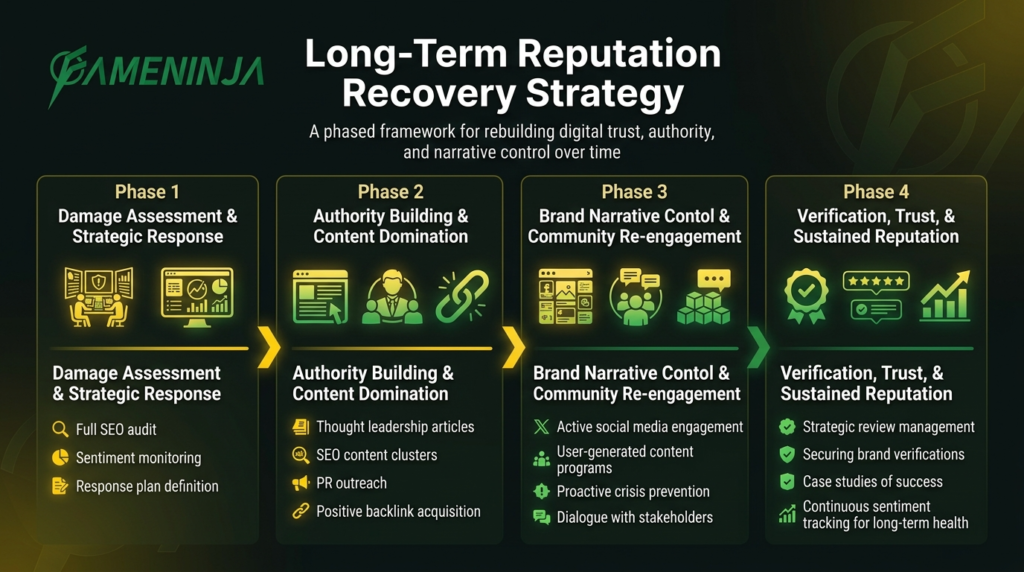
Even after the immediate crisis is managed, reputation recovery takes 6-24 months. Here’s the long-term plan:
Phase 1: Stabilization (Months 1-3)
Build a foundation of positive, current content about the executive:
Detailed LinkedIn profile with regular thought leadership posts Personal website or blog with professional content Guest articles in industry publications Speaking engagements (start with smaller, industry-specific events) Podcast appearances (industry-focused, not mainstream media)
The goal is to create 10-15 positive, authoritative pieces of content that rank for the executive’s name. See our guide on personal branding creation for the detailed framework.
Phase 2: Authority Building (Months 3-12)
Position the executive as an industry authority:
Authored opinions in Economic Times, Mint, or industry publications Board memberships or advisory roles Industry association involvement Academic guest lectures or mentoring programs Awards and recognition applications
Each of these creates positive data points that search engines and AI platforms use to construct the executive’s narrative.
Phase 3: Narrative Reset (Months 12-24)
By this point, the crisis should be well behind. The executive’s Google results should be dominated by professional content, not crisis coverage. AI search engines should be citing their expertise, not the allegations.
If the crisis content still ranks prominently after 12 months, more aggressive deindexing or suppression tactics may be needed.
The PoSH Act Connection
The Prevention of Sexual Harassment (PoSH) Act 2013 is the statutory framework for workplace harassment complaints in India. Understanding its interaction with reputation management is critical:
ICC investigation timeline: The ICC must complete its investigation within 90 days. During this period, public commentary on the allegations should be minimal. The investigation’s conclusions will significantly influence the long-term reputation trajectory.
Confidentiality obligations: The PoSH Act mandates confidentiality of the complaint, the complainant’s identity, and the investigation proceedings. If this confidentiality is breached by any party, it can be grounds for legal action.
ICC findings and reputation: If the ICC finds the allegations unsubstantiated, this finding is a powerful tool for reputation recovery. It provides an official, independent conclusion that can be cited in deindexing requests, suppression content, and legal proceedings.
If the ICC finds the allegations substantiated: The executive needs to accept the consequences. Attempting to cover up or deny a substantiated finding will create a far worse reputation crisis than the original allegation.
The Board and Investor Communication Dimension

For CEOs and senior executives, reputation crises don’t just play out in public. There’s a parallel private dimension involving the board of directors, investors, and key stakeholders.
Board communication (first 48 hours). The board should be informed proactively, not through news coverage or social media. A brief, factual summary of the situation, the response plan, and the legal framework should be shared with the board chairman or lead independent director within 24 hours.
Investor relations. For publicly listed companies, SEBI disclosure requirements may apply if the crisis materially affects the company. For privately held companies, key investors should receive a confidential briefing. The message should focus on: the facts as known, the formal investigation process underway, and the measures in place to ensure business continuity.
Internal communication. Employees will hear about the allegations through media or social channels. An internal communication from the CEO (or, if the CEO is the accused, from the board) should:
Acknowledge that the company is aware of the situation State that it’s being handled through proper processes (ICC under PoSH Act if applicable) Remind employees of the company’s policies and reporting channels Ask for professionalism and confidentiality Avoid taking a public position on guilt or innocence during investigation
Client and partner communication. For service businesses, key clients may need reassurance. This should be handled individually by the account leads or senior leadership, not through mass communication. The message: “We’re aware, we’re handling it professionally, and business operations are unaffected.”
The private communication dimension is often overlooked in reputation crisis guides, but it can determine whether the executive keeps their position and whether the business retains key relationships during the crisis.
How FameNinja Handles Executive Crisis Cases
At FameNinja, executive reputation crisis management is our highest-value service. These cases require speed, discretion, and strategic sophistication:
We work alongside legal counsel, not instead of. We handle the digital reputation dimension while the executive’s lawyer handles the legal dimension. The two workstreams must be coordinated but are distinct.
We start with search and AI audit. Within hours of engagement, we audit what Google, ChatGPT, Perplexity, and Gemini show for the executive’s name. This tells us the scope of the digital damage and informs our strategy.
We pursue both removal and suppression. Where content is defamatory or false, we pursue deindexing and platform removal. Where content is accurate (news coverage of the allegations), we focus on suppression through positive content creation.
We build a long-term recovery plan. The immediate crisis response is just the first phase. We develop a 12-month plan for rebuilding the executive’s personal brand and ensuring the crisis doesn’t define their permanent digital reputation.
Absolute confidentiality. Executive crisis cases are handled by a senior team with strict NDAs. Client identities are never disclosed in case studies or marketing materials without explicit written consent.
FAQ
How quickly should an executive respond to public harassment allegations?
Not immediately. Take 24-48 hours to assess the situation, engage legal counsel, and develop a strategic response. Hasty public denials often make things worse. The first response should be brief, measured, and should reference the formal investigation process (ICC under PoSH Act) if a complaint has been filed.
Can an executive sue for false #MeToo allegations?
Yes. False allegations are defamatory under Section 79 BNS 2023, punishable by up to 2 years imprisonment. The executive would need to prove the allegations are false, were made with knowledge of falsity or reckless disregard for truth, and caused reputational harm. The Zulfiqar Ahman Khan case (Delhi HC, 2019) provides precedent for restraining media from publishing unverified allegations.
How long does executive reputation recovery take?
Typically 6-24 months for full recovery, depending on the severity of the crisis, whether the allegations are substantiated, and the effectiveness of the recovery strategy. Search engine results can be significantly improved within 3-6 months. AI search narrative recovery takes 3-9 months. Full professional reputation restoration (back to pre-crisis levels) typically takes 12-24 months.
Should the executive stay on social media during a crisis?
Reduce activity in the first 1-2 weeks. Don’t engage with posts about the allegations. After the initial cooling period, resume professional posting about industry topics (not about the crisis). Continued professional visibility signals stability and expertise, which helps the recovery narrative.
How does the PoSH Act interact with reputation management?
The PoSH Act mandates confidentiality of the complaint and investigation. Breach of confidentiality can be challenged legally. If the ICC finds allegations unsubstantiated, this finding supports reputation recovery through deindexing requests and content strategies. The ICC’s 90-day investigation timeline also provides a natural window for the public narrative to cool.
Can negative news articles about allegations be removed from Google?
Factual news coverage of allegations is difficult to deindex because it serves the public interest. However, if the executive is later cleared, outdated articles about the allegations (without the resolution) can be candidates for RTBF deindexing requests. More commonly, suppression (pushing negative articles to page 2+) is the effective approach. See our guide on deindexing negative news.
What if the allegations are partially true?
This requires the most nuanced approach. Acknowledge what’s accurate, address what’s been fixed or changed, and contest what’s false. A genuine, specific apology for actual wrongdoing combined with a clear commitment to change is more effective for long-term reputation than total denial. Work with both legal counsel and PR advisors to craft the right response.
How much does executive reputation crisis management cost?
Executive crisis management is the highest-cost tier of ORM services because of the speed, seniority of team involvement, and duration required. Initial crisis response (first 30 days) typically costs Rs. 2-5 lakhs. Long-term reputation recovery (6-12 months) ranges from Rs. 5-15 lakhs. For high-profile cases involving active legal proceedings and media management, costs can be higher. The investment is justified by the financial impact: for executives whose compensation and business depends on their reputation, a well-managed crisis can save crores in lost opportunities.