

Type your own name or your company into Google. If the first thing you see is a wall of one-star reviews, an angry forum thread, or an old complaint that refuses to die, you already know the feeling.
The best ORM tools exist for a feeling every founder knows. Type your own name or your company into Google, and if the first thing you see is a wall of one-star reviews, an angry forum thread, or an old complaint that refuses to die, it sits in your stomach for the rest of the day. Fixing that view is the daily work of online reputation management.
Here is the calm version of the truth. Your online reputation is not fixed in stone. The right ORM strategies and the right tools give you a real way to monitor what people say, catch problems early, and rebuild what shows up when someone searches for you.
This guide covers the 10 best ORM tools for 2026, the strategies that make them work, which tools actually do sentiment analysis, and one thing most listicles skip: what these tools will not do for you.
Quick answer
The best ORM tools in 2026 are Locobuzz, QuickMetrix, Brand24, Mention, Hootsuite Insights, Reputology, BuzzSumo, ReviewTrackers, Sprinklr, and NetBase Quid. They monitor mentions, track reviews, and read sentiment. They do not delete content on their own. Removing a page still needs the host, the platform, or a court order.
What is ORM in digital marketing?
Online reputation management (ORM) is the ongoing work of watching, shaping, and improving how your brand looks across search engines, social media, review sites, and news. Think of it as a digital PR desk that runs day and night, backed by data instead of guesswork.
ORM decides who controls your story. A single one-star review, a bad news piece, or a post that spreads fast can set the tone for a first-time customer. Good ORM makes sure that is not the only thing they find.
Why ORM strategies matter in 2026
A post can spread in minutes. One review can push a buyer toward a competitor. Strong ORM is no longer optional for a serious brand. A few plain reasons why:
- First impressions live in search. Most shoppers read reviews before they buy. People trust Google more than an advertisement.
- Trust is the real currency. Open, consistent, believable brands win the click.
- A crisis moves fast. A planned response protects years of goodwill in the moment it matters.
- ORM supports SEO. Positive, authoritative content tends to rank; thin, angry content tends to fade.
- You learn what people really think. Monitoring and sentiment give you honest, unfiltered feedback.
The 10 best ORM strategies you need in 2026
These are not vague tips. They are the working strategies that steady brands use to protect their digital identity. Each one covers what it is, why it works, and how to apply it.
1. Monitor brand mentions in real time
If you do not watch it, you cannot manage it. Real-time monitoring is the foundation of every ORM plan. Track your name across Google results, Facebook, Instagram, YouTube, LinkedIn, Yelp, G2, Trustpilot, blogs, forums, news sites, Reddit, Quora, and X.
Why it works: you catch a problem while it is small. How to apply it: set up automated alerts so you hear about a mention the moment it lands, then respond, read the mood, and escalate only what needs it.
2. Use sentiment analysis to read public perception
It is not only what people say. It is how they feel when they say it. Sentiment analysis sorts the mood around your brand into positive, negative, neutral, and mixed.
Why it works: it shows patterns in how customers behave and tells you which issues carry weight. How to apply it: watch for concerns that repeat, spot shifts in mood, and adjust your message before a small dip becomes a trend.
3. Respond quickly to negative reviews
Most bad experiences can be recovered with a fast, human, competent reply. Silence sends a louder message than the review itself. Customers would rather be heard than told everything was perfect.
How to apply it: reply within 24 to 48 hours, stay calm, show empathy, offer a fix, and move the detail offline when it gets personal. If a review is fake or defamatory rather than fair, that is a different track, and our team handles negative review removal through the platform's process or a legal notice.
4. Suppress negative content with positive SEO
People believe a bad article that ranks first, even when it is old or wrong. Suppression is about lifting strong, accurate content above the negative result: company blogs, case studies, press releases, founder stories, customer wins, and video.
Why it works: search engines reward fresh, useful, relevant pages. How to apply it: build a steady set of high-quality, branded pages so the good results outrank the bad ones over time. This is suppression, not deletion, and the difference matters. If the target is an article you want gone at the source, see removing negative articles and content.
5. Build a real review acquisition strategy
Random reviews will not save you. You need a steady flow of new, genuine, positive reviews across the platforms your customers use.
How to apply it: ask at the right moment, just after a good result. Use review-request automation, invite short video testimonials, and give people a frictionless link. Why it is powerful: a healthy, recent review volume builds trust and lifts sales.
6. Run a positive content engine
Control the story before you have to defend it. A working content engine keeps producing blogs, videos, social posts, interviews, press features, thought leadership, and case studies.
Why it works: strong content outweighs a stray negative impression. You get to shape what people see, search for, and share. This is the backbone of any long-term reputation plan, and it pairs directly with reputation repair when there is damage to undo.
7. Own your social media reputation
Social media is the new review site, and it does not forgive slowly. It is also your best chance to show a human face. Reply fast, join the conversation, engage with mentions, keep your tone consistent, and use positive trends to your advantage. A brand that listens tends to win.
8. Benchmark your competitors
A close look at rivals shows what customers complain about, where they fall short, what earns praise, which content ranks for them, and which reviews hurt them. Why it matters: you fix your own blind spots on purpose. How to apply it: review your top three competitors every month and turn their weak spots into your advantage.
9. Build a crisis management framework
A crisis can land at any hour: a viral complaint, a miscommunication, public backlash, a data breach, a misleading news story. Without a plan, teams scramble. With one, you take control.
Your framework should name who responds, how fast, in what tone, the escalation rules, the approval flow, and the message templates. This structure protects brand trust in the first hour, which is the hour that counts.
10. Use ORM tools to run the strategy at scale
Your strategy is only as good as your ability to execute it. ORM tools monitor mentions, read sentiment, track competitors, manage reviews, generate reports, send crisis alerts, and pull customer conversations into one place. They turn a plan into a system that can grow with you. That is the bridge to the tools themselves.
Best ORM tools with sentiment analysis
Sentiment analysis is the feature buyers ask about most, because it turns a raw feed of mentions into a mood you can act on. Not every tool leads with it. This table flags which of the 10 tools treat sentiment as a core, stated feature.
| Tool | Sentiment analysis | Best for | | --- | --- | --- | | Locobuzz | Yes | Large brands with heavy interaction volume | | Brand24 | Yes | Small business and solo founders | | Sprinklr | Yes (AI analytics) | Enterprises | | NetBase Quid | Yes | Data-driven, deep audience insight | | ReviewTrackers | Yes | Review-heavy businesses | | Reputology | Yes | Service, hospitality, healthcare | | Hootsuite Insights | Yes (Brandwatch) | Enterprise social listening | | QuickMetrix | Not highlighted | Teams needing dashboards and CX | | Mention | No (alerts-led) | Startups tracking keywords | | BuzzSumo | No (content-led) | Content-driven ORM |
A note so this stays honest: "Yes" means sentiment is a core, stated feature of that tool. Some of the others may offer it as an add-on or in a higher plan, so check the current pricing page before you commit. Vendor features change often.
The 10 best ORM tools you can use today
Here are the platforms holding the ORM space in 2026, what each one does well, and who it suits.
1. Locobuzz
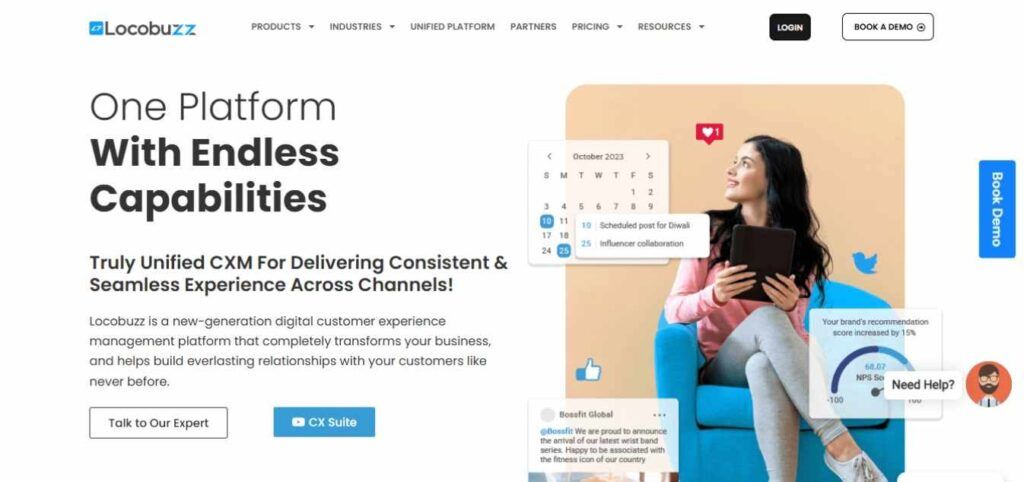
A single platform for social listening, customer engagement, and analytics. It shines when a brand runs ORM at scale.
- Real-time monitoring across many channels
- Sentiment analysis
- Customer engagement tools
Does sentiment: yes. Best for: mid-sized to large businesses handling heavy interaction volume.
2. QuickMetrix
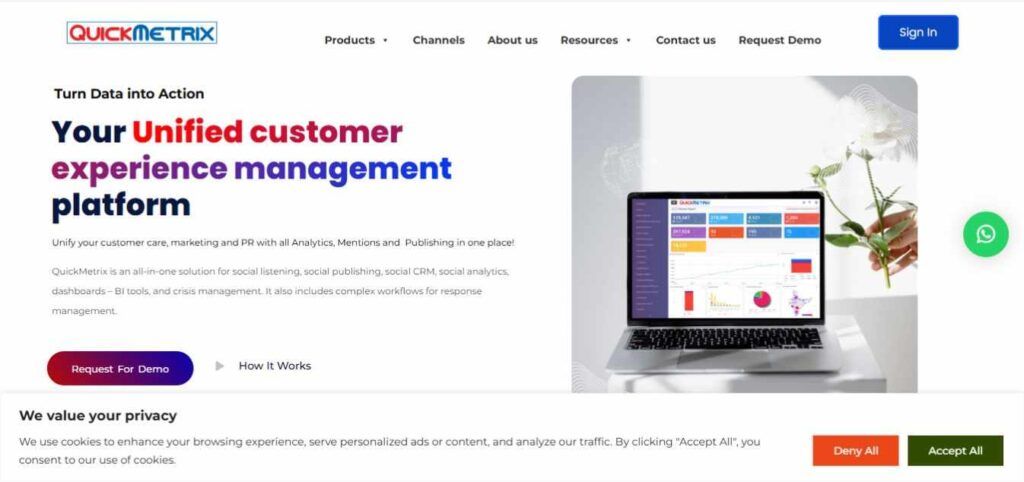
An ORM suite that folds in analytics and customer experience management. It suits teams that want their workflow in one view.
- Keyword tracking
- Custom dashboards
- Collaboration tools
Does sentiment: not its lead feature. Best for: companies that want to tidy up their response process.
3. Brand24

An affordable ORM platform that lets smaller brands run the core strategies with real-time coverage.
- Real-time alerts
- Sentiment analysis
- Platform filtering
Does sentiment: yes. Best for: small enterprises and independent professionals.
4. Mention
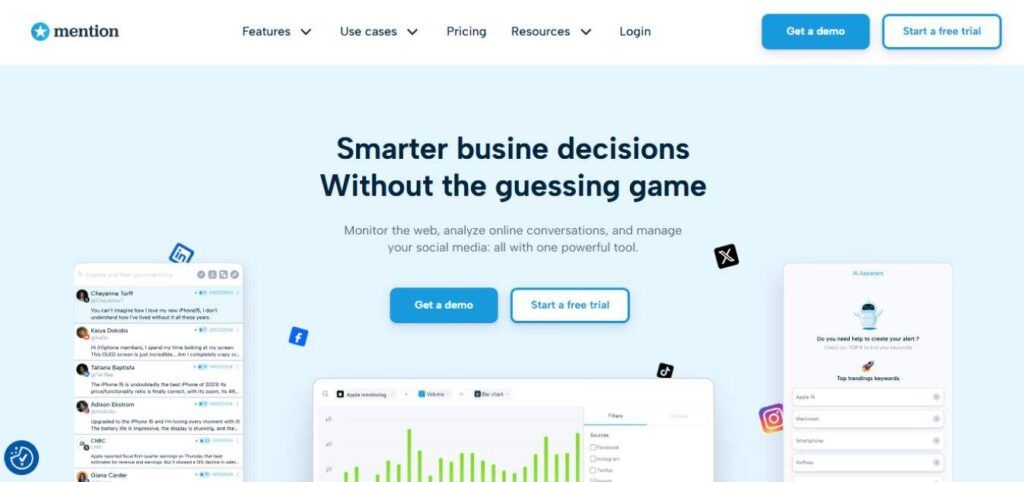
A simple ORM tool for newer businesses starting to build a monitoring habit.
- Keyword alerts
- Tailored reports
- Hashtag monitoring
Does sentiment: no, it leads with alerts. Best for: startups and small businesses.
5. Hootsuite Insights
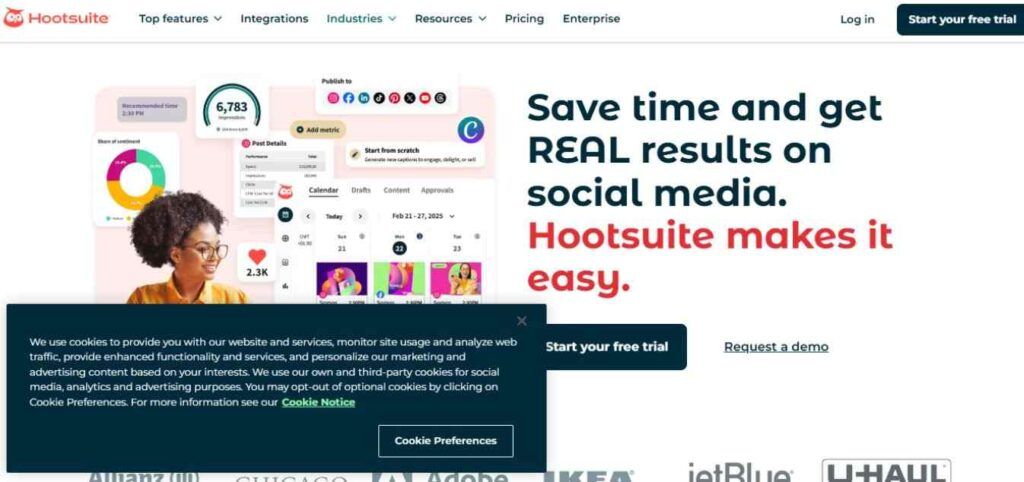
Powered by Brandwatch, it brings enterprise-grade social listening and analytics to brands that need depth.
- AI-powered analytics
- Hootsuite integration
- Custom dashboards
Does sentiment: yes, through Brandwatch analytics. Best for: large enterprises.
6. Reputology
A specialist in review monitoring, which matters for firms that live and die by customer feedback.
- Review aggregation
- Sentiment tracking
- Response templates
Does sentiment: yes. Best for: service, hospitality, and healthcare businesses.
7. BuzzSumo
BuzzSumo finds trending content and the people who spread it, which is how content-led ORM works.
- Content discovery
- Influencer identification
- Content performance metrics
Does sentiment: no, it focuses on content. Best for: marketers running content-driven ORM.
8. ReviewTrackers

Built to lift reputations by keeping a close watch on reviews across platforms.
- Review aggregation
- Sentiment analysis
- Smart alerts
Does sentiment: yes. Best for: businesses that collect a lot of reviews.
9. Sprinklr
An enterprise-grade ORM and analytics platform for brands that need advanced coverage and prediction.
- Social listening
- AI analytics
- CRM integration
Does sentiment: yes, through its AI analytics. Best for: large enterprises.
10. NetBase Quid
Advanced analytics for brands that want deep audience sentiment and trend insight.
- Sentiment analysis
- Predictive analytics
- Competitor benchmarking
Does sentiment: yes. Best for: data-driven ORM teams.
ORM tracking and monitoring dashboards
ORM tracking is the daily habit that keeps a strategy alive. A monitoring dashboard pulls every mention, review, and social post into one screen so nothing slips past you. A good ORM tracker does four jobs well:
- Mention tracking: every new reference to your name or brand, as it happens.
- Review tracking: new ratings across Google, Yelp, Trustpilot, and industry sites in one feed.
- Sentiment tracking over time: a line you can watch, not a single snapshot, so you see a mood shift before it becomes a trend.
- Alert tracking: a crisis flag the moment volume or negativity spikes.
Set your dashboard to alert on your brand name, your key people, your products, and the common misspellings. Review it on a fixed rhythm, daily during a live issue and weekly the rest of the time. The point of an ORM tracker is not to collect data. It is to shorten the gap between a problem appearing and you doing something about it.
ORM services: when you would rather not run it yourself
Tracking a reputation across dozens of platforms is real work, and most founders and executives do not have the hours. If you would rather hand it over, our ORM services team sets up the monitoring, reads the sentiment, responds where it helps, and runs the suppression and removal tracks in parallel. You get the outcome without living inside a dashboard. We tell you plainly which results we can suppress and which need a platform or a court, so there are no surprises later.
What ORM tools will not do
Here is the part most listicles leave out, and it is the most useful part. What most people get wrong is treating a monitoring tool like a delete button. It is not one.
An ORM tool watches and surfaces. It does not remove anything by itself. No tool can force Google to deindex a page, and no tool can make a news site pull an article. Those outcomes depend on the host, the platform, or a court, not on your software subscription.
Two ideas that get mixed up, so let us keep them separate. Suppression pushes a negative result down with stronger content, and a tool can help you track that progress. Deletion removes the source itself, and that is a legal and platform question, not a dashboard setting. Removing a result from Google (deindexing) usually needs a legal or policy basis; removing the source page needs the host or a court order. Say which one applies to your case, because they are different promises.
In India, a few routes sit behind those outcomes. Under the IT (Intermediary Guidelines) Rules 2021, platforms must have a grievance officer who handles takedown requests within set timelines. The DPDP Act 2023 gives you a right to seek correction and erasure of your personal data held by a data fiduciary, which supports Right-to-Be-Forgotten style arguments. For intimate images, impersonation, or online harassment, report through the National Cyber Crime Reporting Portal at cybercrime.gov.in. When a platform will not act, a court order is often the honest next step, and it is the basis for most deindexing and suppression work. For Google's own removal routes, start with its guide on removing information from Google, and read the current IT Rules and DPDP text on the MeitY site. This is general information, not legal advice.
The honest limitation: even the best tool will miss some mentions, cannot promise a negative result comes down, and cannot fix a genuine service problem for you. Tools find the fire. People and process put it out.
How to choose the best ORM tools
Five years ago, few businesses thought they would need software to track what strangers say online. Today it is table stakes. Here is how to pick the right tools for your situation.
Start with your goal
- Crisis control: pick tools with real-time alerts and sentiment analysis, such as Sprinklr or Locobuzz.
- Review management: pick platforms that consolidate reviews and offer templates, such as Reputology or ReviewTrackers.
- All-in-one monitoring: pick a full suite with multi-platform social listening.
Match features to your size
- Small business: Mention, Brand24
- Enterprise: Hootsuite Insights, Sprinklr
- Data-focused brands: NetBase Quid
Prioritise ease of use
A good ORM tool should not feel like a spacecraft panel. Look for a simple interface, quick onboarding, and real support with learning material.
Budget with intent
- Entry level: Mention
- Mid-range: Brand24, Reputology
- Enterprise: Sprinklr, Hootsuite Insights
Never waste the free trial. Run your real brand name through it before you pay.
Check for scalability
Make sure the tool grows with you: integrations with Slack, HubSpot, and Google Analytics, multi-brand support, and room for add-ons.
Read the reviews before you buy
Yes, the irony is real. The reviews on an ORM tool tell you how it will treat your own reputation. Believe them.
How ORM shows up in AI answers
Search is no longer only Google. People now ask ChatGPT, Perplexity, Gemini, and Google AI Overviews to describe a company or a person before they ever click a link. Those engines build an answer from what they can read across the open web: your site, your reviews, news, and third-party profiles.
Two things follow from that. First, most ORM tools still track search and social, not what an AI assistant says about you, so you have to check the AI answers yourself by asking the same questions your customers would. Second, you influence those answers the same way you influence search: with accurate, consistent, authoritative content and clean entity information (the same name, the same details, everywhere). When your own pages and verified profiles are the clearest source on you, AI answers tend to lean on them. When they are thin, the engine leans on whatever else it finds, and that is where a stray negative page starts speaking for you.
An anonymised FameNinja example
A mid-sized services firm came to us after its monitoring tool flagged a sudden cluster of one-star reviews and a forum thread climbing in Google. The tool did its job. It found the problem early. What it could not do was fix it.
We used the alerts for detection, then ran three tracks at once: a fast, human response to the genuine complaints, a positive content push to outrank the forum thread, and a platform flag plus a legal notice for the reviews that were fake rather than fair. Detection came from software. The result came from people, process, and the right legal route. We do not share numbers or client names, because a real ORM outcome is about the pattern, not a headline stat.
Where to start
Your online reputation can shape a sale before you ever speak to the buyer, and it is not fixed. With the right strategies, backed by the right tools, you can watch the conversation, respond in time, and rebuild what people find when they search for you. Just be honest with yourself about the line between suppression and removal, because they are different jobs.
If you would rather have a team run the tracking, the suppression, and the removal routes for you, use the WhatsApp button above or request a free ORM report through our contact page. We will tell you plainly what we can suppress, what we can move to remove, and what needs a court, before you spend a rupee.
Written by Megha Tanwar, ORM Manager at FameNinja. Megha has 8+ years in online reputation management and owns delivery on the firm's most complex removal and suppression engagements. This article is general information, not legal advice.